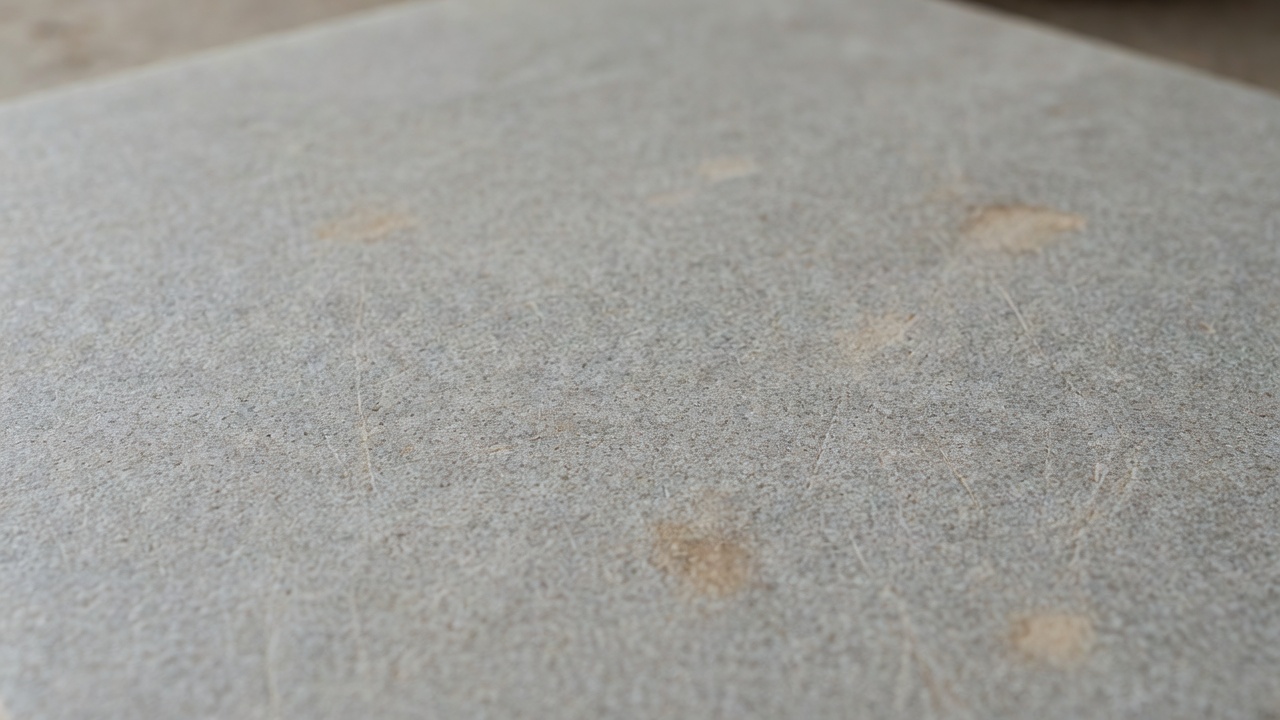
Stone can remain useful through many cycles of occupation, but that is not the same as remaining unchanged. Wear depends on mineral composition, finish, location and care. The aim of maintenance is to preserve function and manage appearance in a way that suits the household. It should not require treating every ordinary meal as a conservation emergency.
Build a small, repeatable routine
Remove grit before it is dragged across the surface. On floors, use appropriate mats and a soft cleaning method compatible with the finish. On worktops, lift heavy objects rather than sliding them. Use chopping boards, coasters and suitable trivets; even stones that tolerate heat comparatively well can be affected by thermal shock, resins or local stress around cut-outs.
Blot spills promptly instead of spreading them. For routine cleaning, use a product confirmed suitable for the specific stone and any existing treatment, following its dilution and rinsing instructions. A pH-neutral label is a useful clue, not a complete compatibility assessment. Avoid acidic descalers on carbonate stones and do not assume that a general bathroom cleaner is suitable for marble.
Never mix cleaning chemicals. Avoid experimenting with abrasive pads, acidic household remedies or concentrated products on an installed surface. If a cleaner leaves a film, adding more cleaner can make the problem worse. Review the instructions and test an approved method on an inconspicuous area or spare offcut before treating the visible installation.
Identify the change before treating it
- Is it a deposit on top?Soap film, limescale or cleaning residue may sit above the stone. Removing it requires a stone-compatible method; the usual acidic limescale remover may damage the surface beneath.
- Is it a change in colour?A darker area can indicate moisture or an absorbed substance. Its pattern and whether it dries are useful observations, but they do not provide a diagnosis on their own.
- Is it a change in reflection?A dull or pale patch after contact with lemon, wine or vinegar may be etching on an acid-sensitive stone. Cleaning does not replace the material removed by a chemical reaction.
- Is it physical damage?A scratch, chip, open crack or loose piece calls for an assessment of the surface and sometimes the assembly. Stop using an unstable component and seek appropriate professional help.
Photograph the mark in diffuse and raking light. Record what contacted the stone, when it happened and which products have already been tried. This short history can be more useful to a restoration specialist than a succession of improvised treatments. Do not assume a mark that resembles a stain will respond to a poultice; the wrong chemistry can make the appearance worse.
Know what an impregnator can do
An impregnating sealer is generally intended to reduce the rate at which certain liquids enter the pore structure. It does not turn every stone into a waterproof, scratch-proof or acid-proof surface. Ordinary impregnators do not prevent the reaction that causes etching in calcite-rich marble and limestone. A coating sold for acid protection is a different treatment with its own appearance, use and maintenance implications.
Some stones and finishes may benefit from impregnation; others may absorb very little or have factory treatments that affect compatibility. The supplier should advise on the specific product, application and curing conditions. Excess product left on the face can cause streaks or haze. Do not add another layer simply because a calendar reminder says that a year has passed.
Reapplication depends on the product, wear, cleaning and observed behaviour. A water-darkening observation can help raise a question, but it is not a complete diagnostic test for all staining risks. Keep the original treatment record and ask the supplier how to assess performance. Fixed universal sealing intervals are less useful than evidence from the actual installation.
Choose a deliberate relationship with age
On some surfaces, small etches and fine scratches gradually merge into a softer overall appearance. On others, isolated marks remain visually dominant. Decide whether to accept, blend or restore them. A professional may need to work across a larger area to match the surrounding sheen, and filled or resin-treated stones can limit the available methods.
Keep spare pieces, product records and the approved finish sample. They make future colour matching, repair trials and replacement easier. Recurring moisture staining, widening cracks or failed joints should prompt investigation of the cause rather than repeated cosmetic treatment. A room can welcome patina while still demanding sound waterproofing, secure support and safe surfaces.